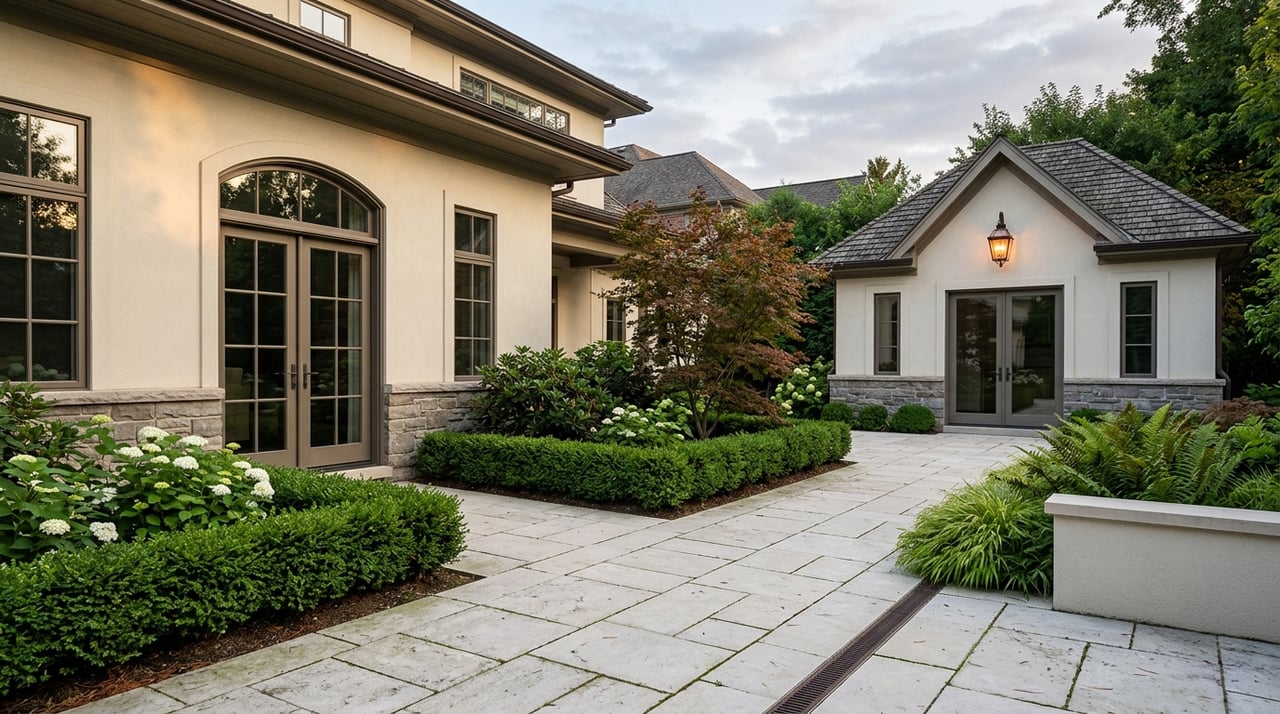
Boulevard Bluffs ADU Investing and Infill Opportunities
June 11, 2026
June 11, 2026
If you own property in Boulevard Bluffs, you may be sitting on more flexibility than you realize. This southwest Everett neighborhood has a mix of older homes, newer single-family construction, larger lots in some pockets, and a physical setting that can create both opportunity and complexity. If you are exploring an ADU, an interior conversion, or a deeper infill play, understanding the local rules and site conditions can help you move with more confidence. Let’s dive in.
Boulevard Bluffs is a mostly residential Everett neighborhood bounded by Port Gardner Bay, Phillips Creek, Merrill Creek Parkway and Seaway Boulevard, and the Mukilteo city limits. The city describes a mix of new single-family homes, larger homes, commercial businesses, and apartment complexes along the south side.
The neighborhood’s physical setting matters just as much as its zoning. Everett’s planning documents describe Boulevard Bluffs as a ridge area with views of Possession Sound and the Olympic Mountains, with ravines and hillsides separating large-lot subdivisions. Many of the single-family homes were built between 1940 and 1980, which creates potential for remodel, reconfiguration, and lot-specific redevelopment.
For you, that means the opportunity is not just about whether housing is allowed. It is also about how slope, drainage, access, and site design may shape what is practical on a given parcel.
For many owners, the most approachable path is still an ADU. Washington law now requires fully planning cities and counties to allow two ADUs on residential lots that allow single-family homes within urban growth areas, and local rules must allow an ADU of at least 1,000 square feet.
Everett’s current ADU rules are notably flexible. The city says ADUs are allowed in all zones except Light Industrial and Heavy Industrial. In Neighborhood Residential, Urban Residential, and Mixed Use zones, Everett also says there is no limit to the number of dwelling units on a lot, including ADUs, as long as the applicable standards are met.
That does not mean every property can support the same outcome. Height, setbacks, lot coverage, utility needs, and site conditions still matter, especially in a neighborhood with hillsides and ravines like Boulevard Bluffs.
Here are several current Everett ADU standards that may open the door for more properties than owners expect:
These rules can make Boulevard Bluffs especially interesting for owners of older homes with underused basements, attics, or flexible interior space.
In a neighborhood with varied topography, internal conversions can be especially appealing. Everett says internal-only conversions are exempt from site and building design requirements, which can make them more straightforward than a detached structure or a visible addition.
If you already have a lower level, attic, or internal area that can be reworked, that may offer a cleaner path than starting from the ground up. It can also reduce some of the design coordination that comes with street-facing additions.
Everett offers several fee and parking advantages for smaller ADUs. Those details can materially affect your early numbers.
That said, lower fees do not mean zero site costs. Water, sewer, stormwater work, and permit review can still affect your budget depending on the scope of the project.
The Boulevard Bluffs conversation is no longer limited to a main house plus one small extra unit. Everett’s 2025 middle-housing update implemented changes in response to HB 1110 and replaced the old single-family residential zone with Low-Density Residential subdistricts while keeping local height, setback, and lot-coverage standards where possible.
In practical terms, that expands the range of infill conversations you may want to have. Depending on parcel size, access, utility capacity, and site constraints, some properties may be better suited for a broader redevelopment strategy.
Commerce describes middle housing as housing types such as:
For Boulevard Bluffs, the most realistic candidates will still depend on the parcel. A flatter, better-accessed site with fewer physical constraints may support more ambitious planning than a steep or highly constrained ridge property.
Everett’s current development regulations include a cottage-housing section and a unit-lot land-division framework. Through city review, that framework can relax some lot-area, width, depth, frontage, and setback requirements.
That makes certain larger or better-configured Boulevard Bluffs sites worth a second look. If you are evaluating land, a teardown, or an older home on a sizable parcel, the opportunity may be more than a single ADU. It may be a more formal infill or land-division play, subject to city review and site-specific feasibility.
There is an important line in Everett’s rules for anyone studying a more ambitious infill project. Once a project reaches three or more attached dwelling units, it is treated under commercial multifamily building standards rather than simple single-family residential construction.
That threshold can change design, engineering, review, and budget assumptions in a meaningful way. If you are thinking beyond one or two units, it is smart to evaluate that shift early rather than later.
This is where Boulevard Bluffs becomes a very local story. The same ridge setting and view orientation that make parts of the neighborhood appealing can also create feasibility issues before zoning becomes the main challenge.
Everett defines critical areas to include geologically hazardous areas, wetlands, frequently flooded areas, and fish-and-wildlife habitat conservation areas. The city also notes that public maps are only a guide and that a site-specific study by a qualified professional may be necessary.
Because Boulevard Bluffs includes ravines and hillsides, slope stability, drainage, retaining walls, and access can become major variables. A site that looks promising on paper may require additional study or infrastructure work before an ADU or infill concept is truly workable.
This does not mean opportunity disappears. It means the best opportunities are often the ones where the zoning, topography, and utility picture all support the same plan.
If you are sizing up a Boulevard Bluffs property for infill or ADU use, this is a practical way to start:
Everett Permit Services handles construction permits and directs applicants to its online permitting tools, including Map Everett and the Everett Property Report Tool. Early coordination may involve building, plumbing, electrical, site-work, utility, and stormwater review.
For many Boulevard Bluffs owners, the clearest opportunity is still an internal conversion or ADU. Everett’s current rules make smaller-scale housing additions more feasible than many people assume, especially with no minimum lot size requirement, up to two ADUs allowed per principal dwelling, and several fee reductions.
For investors and owners looking at larger repositioning plays, the neighborhood can also support more expansive infill conversations. The catch is that Boulevard Bluffs is highly site-sensitive, so the winning strategy usually starts with the property itself, not just the zoning summary.
If you are weighing whether to hold, remodel, add value, or position a property for sale, a parcel-specific review can help you understand what the market may reward and where costs may show up. In a neighborhood like this, good planning is often where value is created.
If you want help evaluating a Boulevard Bluffs property, positioning land or an infill-ready home for sale, or understanding how buyers may view ADU and redevelopment potential, connect with Adam Cobb.
With an unwavering commitment to client satisfaction, Adam's approach is both approachable and highly responsive, earning praise for his ability to exceed expectations. Let Adam Cobb and his team guide you through a seamless real estate experience. With us, your goals are always our priority, and our expertise is your advantage.