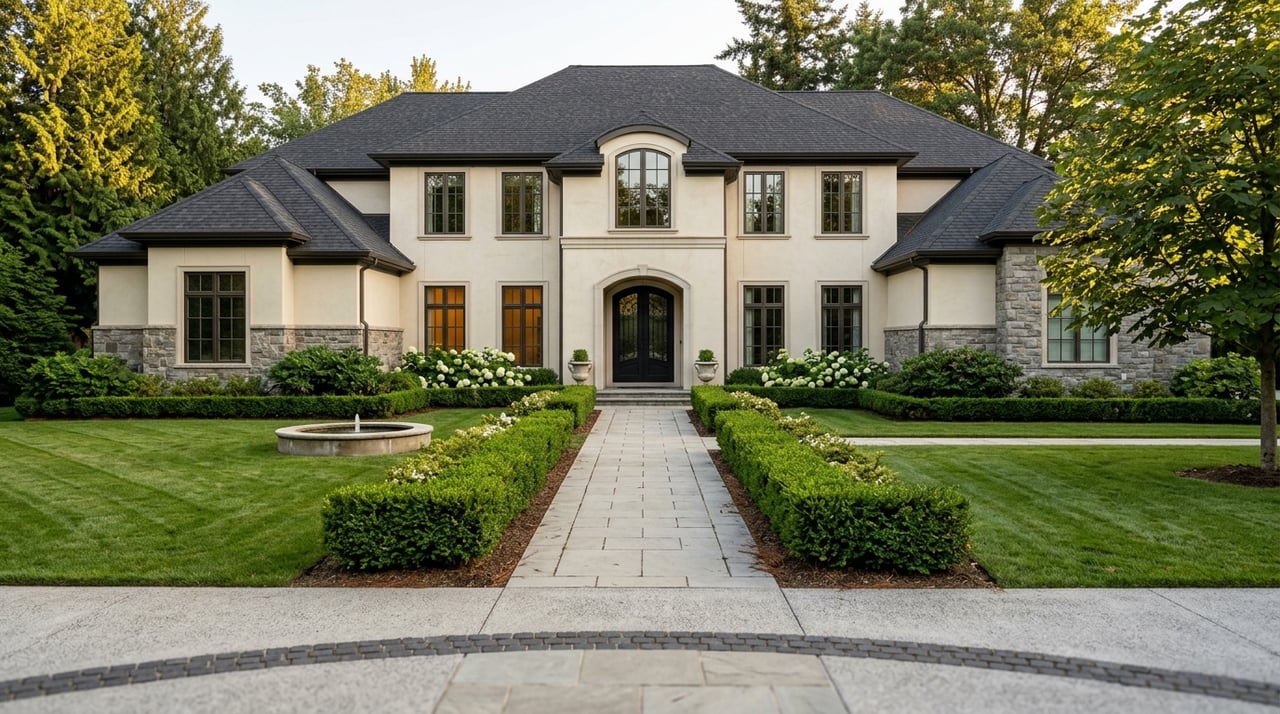
Explore Woodway WA Estates Architecture and Home Styles
May 21, 2026
May 21, 2026
If you are drawn to privacy, land, and a home that feels tucked into the landscape, Woodway is one of the clearest examples of estate living in North Puget Sound. This is not a typical subdivision market with tight lots and a uniform streetscape. In Woodway, the setting, parcel size, and natural surroundings often shape the ownership experience as much as the house itself. Let’s dive in.
Woodway’s estate character starts with its land pattern. The town says it was first platted in 1912 for two-acre residential lots, and that low-density pattern still defines much of the community today. According to the town’s comprehensive plan, about 90% of Woodway’s land is residential, there are no commercial zoning districts, and the housing stock is overwhelmingly single-family.
That framework creates a very different feel from many nearby neighborhoods. Instead of compact lots and denser block patterns, Woodway includes multi-acre tracts, preserved urban forest, and low-density subdivisions. The town reports 476 homes spread across four single-family residential zoning districts, which helps explain why the area feels quiet, spacious, and highly residential.
Woodway sits on a rolling plateau above Puget Sound, with steep bluffs, wetlands, drainage basins, streams, and mature Northwest forest cover. Most of the town lies between 180 and 350 feet above sea level, and planning documents describe the natural environment as a Douglas-fir and salal plant community. In practical terms, that means many homes are surrounded by mature trees, layered greenery, and a strong sense of visual separation.
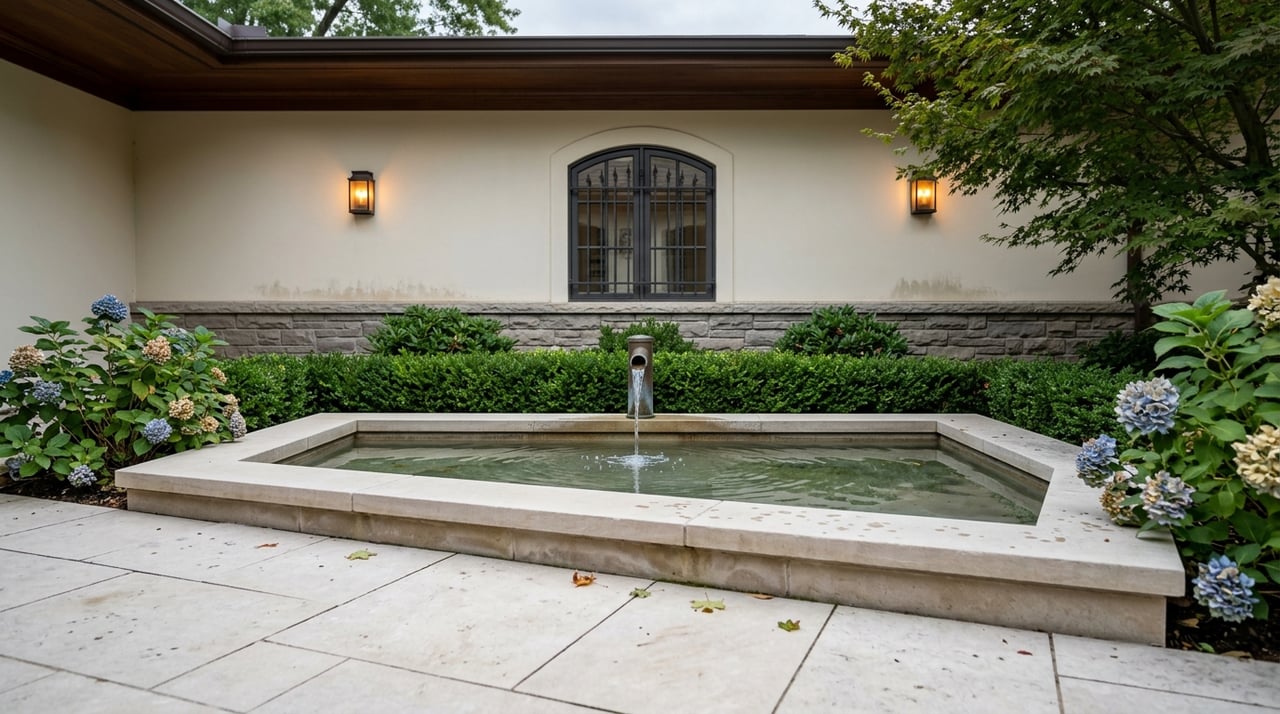
For you as a buyer, that setting often translates into privacy and a park-like atmosphere. Town planning goals emphasize protecting native vegetation, tree canopy, greenbelts, and scenic character. The result is a community where homes often feel nestled into the landscape rather than placed on fully cleared lots.
Acreage living in Woodway usually means more than simply having a larger yard. It often includes long driveways, generous setbacks, room for outdoor amenities, and a site design that prioritizes distance from the street. That can create a sense of calm and separation that is hard to find in more conventional suburban neighborhoods.
Woodway’s zoning code helps preserve that feeling. In the R-87 zone, the minimum lot size is 87,120 square feet, or about two acres, with a 100-foot front setback and 50-foot side and rear setbacks. In the R-43 zone, the minimum lot size is one acre, while the R-14.5 zone uses a one-third-acre minimum with standards that still limit coverage and preserve open site area.
Those standards matter because they shape what you see from the street and what you experience on the property. Homes tend to sit back behind mature landscaping, and there is often room for detached garages, patios, decks, pools, game courts, and similar features. At the same time, the code limits lot coverage, which helps keep sites from feeling overbuilt.
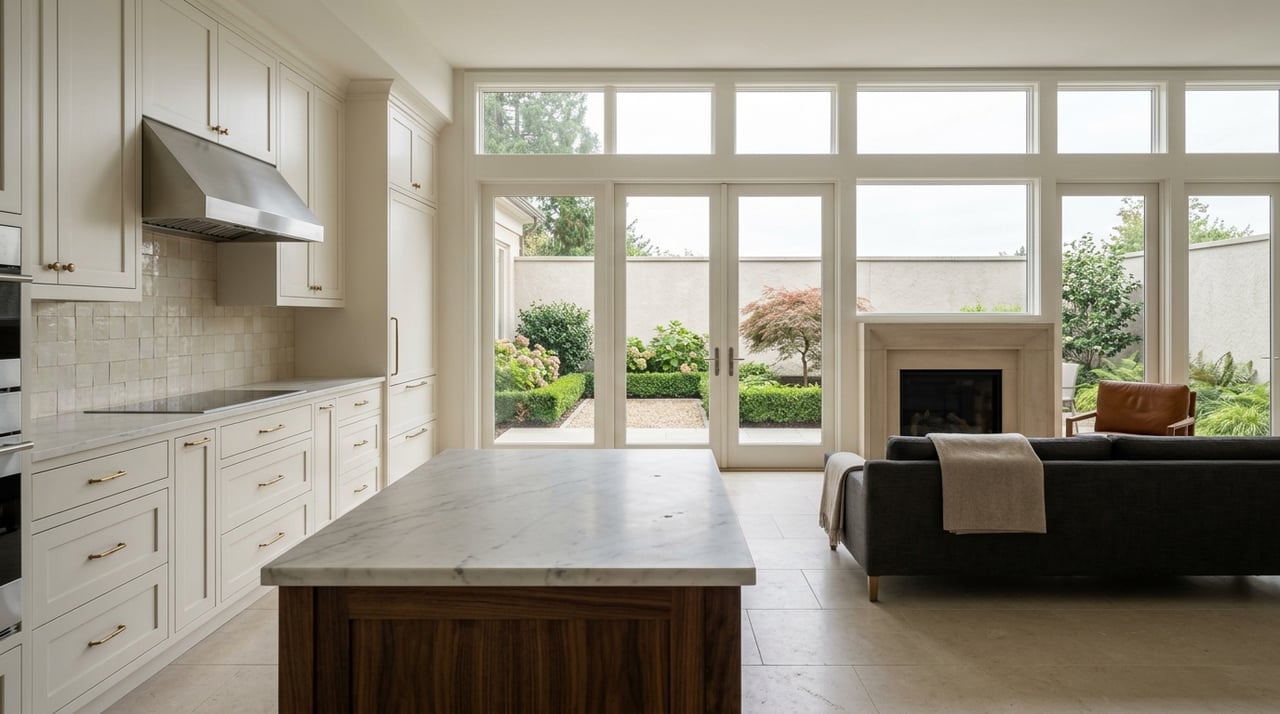
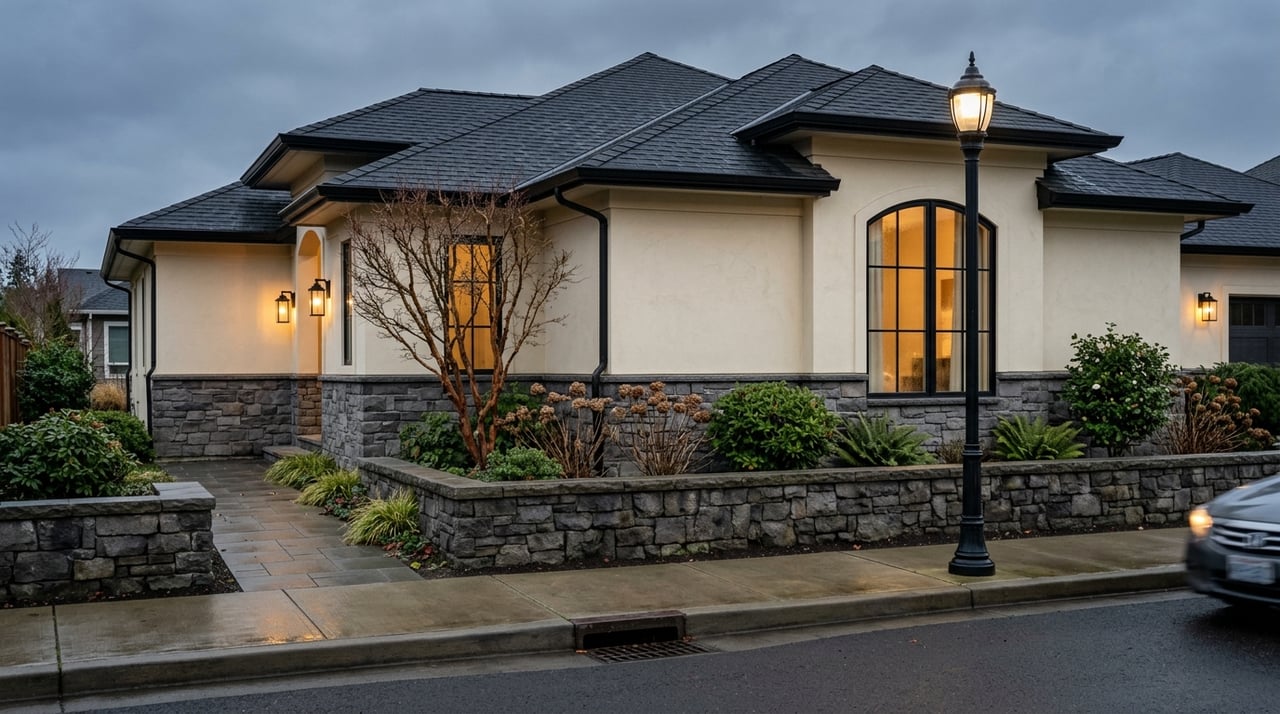
One of the interesting things about Woodway is that there is no single architectural style that defines the town. Recent listings show a wide range of homes, from mid-century ramblers and mid-century modern designs to newer Pacific Northwest contemporary homes and large custom estates with European-inspired detailing. The common thread is less about style label and more about how the home fits its parcel.
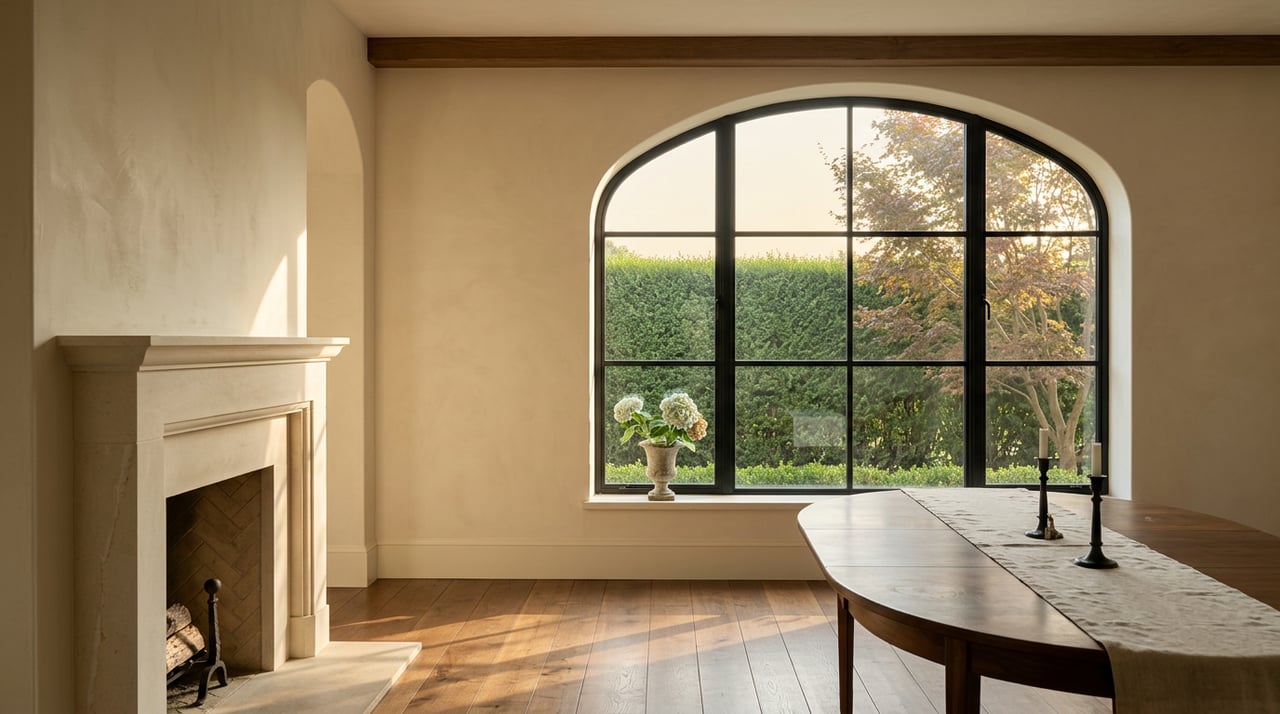
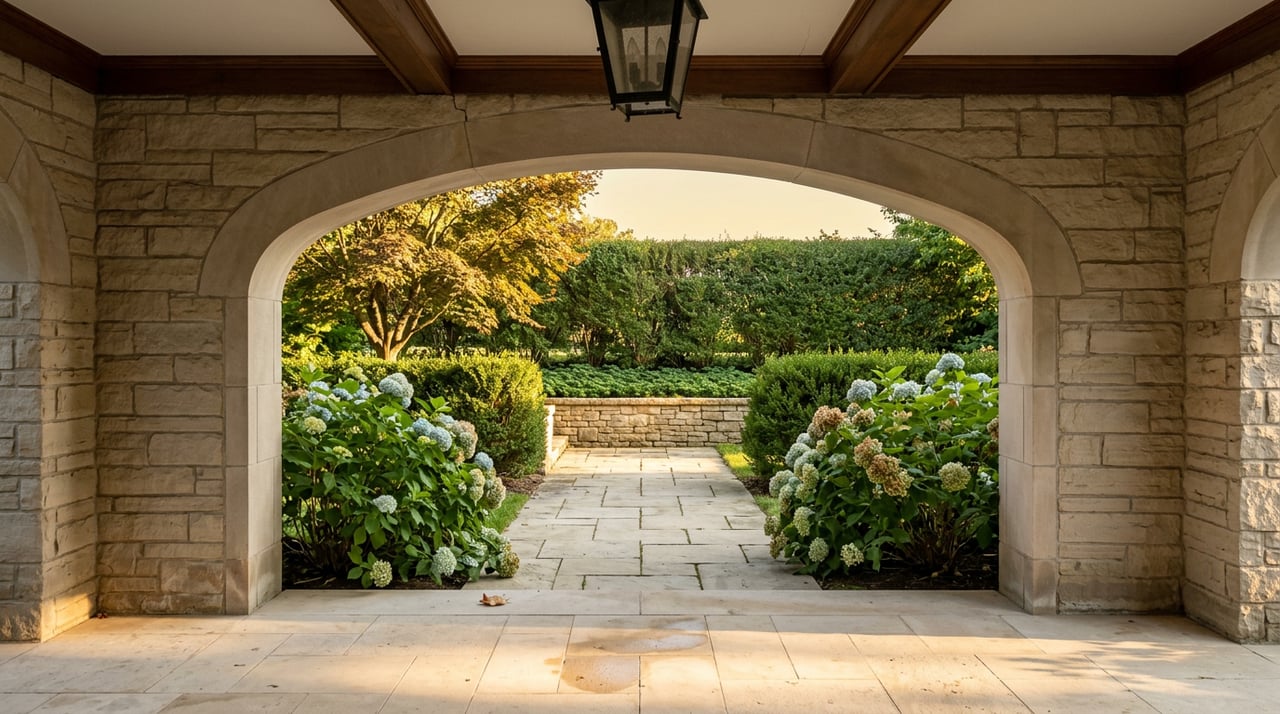
For example, recent marketing of Woodway properties has included a 1949 mid-century rambler on 2.45 acres with walls of glass and vaulted wood-beamed ceilings, a Paul Kirk mid-century modern on 2.5 acres with a guest house and sport court, and a 2.24-acre modern PNW retreat designed for indoor-outdoor living. A separate 3.01-acre newer estate was presented in a French-country style with limestone walls, oak beams, and clay roof tiles. Another 1.38-acre Northwest estate emphasized a gated entry, circular drive, ponds, and a park-like site.
Even with varied architecture, a few patterns show up again and again in Woodway. The first is a strong connection to the outdoors. Many homes are positioned to take advantage of wooded surroundings, natural light, and privacy rather than maximizing every square foot of lawn.
The second is scale. Woodway homes often pair substantial square footage with substantial land, which creates more flexibility for one-level living, guest accommodations, recreation spaces, or expansive entertaining areas. The third is arrival, with features like gated entries, circular drives, or longer approach drives that reinforce the estate feel.
If privacy is high on your wish list, Woodway is notable for how intentionally that quality is protected. The town’s planning goals call for preserving the privacy of individual residences and maintaining a subdued visual environment. Lighting rules are designed to keep light shielded and reduce spill onto neighboring properties.
That matters because privacy in Woodway is not just a byproduct of larger lots. It is also supported by town policies around tree retention, setbacks, and site design. For many buyers, that combination is a major part of the appeal.
Large parcels naturally create more room for outdoor living, and Woodway’s code allows features that support that lifestyle. Pools, game courts, detached garages, patios, decks, arbors, and sheds are among the secondary features allowed under the zoning framework. On the right parcel, that can make it easier to create a property that functions as both a residence and a retreat.
The surrounding environment also supports an outdoor-oriented routine. The comprehensive plan notes that residents use town streets and parks for jogging, running, and bicycling. Woodway also includes parks and reserves in its open-space inventory, while nearby communities provide access to additional services without changing Woodway’s primarily residential feel.
The appeal of acreage living often comes with more hands-on property responsibility. In Woodway, that can include tree care, drainage management, and attention to sloped or environmentally sensitive portions of a site. This is especially important because the town’s development context includes steep slopes, wetlands, streams, aquifer recharge areas, and geologic hazards.
The tree code is also a meaningful part of ownership. Woodway’s regulations are designed to preserve the town’s wooded character, prohibit clear-cutting, protect trees in setbacks and buffers, and require replacement trees or management plans in many cases when significant removals occur. If you are considering a property with major landscape plans, it is smart to understand those rules early.
Large-lot living can raise practical questions about utilities, and Woodway’s setup reflects its low-density pattern. Water and sanitary sewer service are provided through Olympic View Water and Sewer District, while the town owns the stormwater utility. The comprehensive plan states that utility capacity is expected to be adequate through 2044.
Woodway also notes that because of the town’s large-lot zoning, on-site septic systems can remain practical on some parcels. As a result, replacing septic systems is generally not required at this time. For buyers, that means infrastructure can vary by property, so due diligence on utilities and site systems remains important.
Although Woodway is widely known for larger estate parcels, it is not completely uniform. In addition to forested large-lot areas, the code includes smaller-lot UR neighborhoods such as the Upper Bluff and Woodway Highlands. Even there, the stated purpose still emphasizes open space, greenbelts, wildlife habitat, and protection of sensitive natural resources while allowing detached single-family homes.
That distinction matters when you compare listings. Two Woodway properties may share the same town name but offer very different parcel sizes, setbacks, and site conditions. If you are focused on a specific lifestyle, whether that means classic acreage, easier upkeep, or room for outdoor amenities, the zoning context can be just as important as the home itself.
Woodway remains overwhelmingly a single-family, wooded, low-density town, but it is not frozen in time. The current code allows ADUs and certain middle-housing types, though they are still tied to setbacks, critical-area protections, and the town’s broader single-family neighborhood character. In other words, change is possible, but it is being shaped within Woodway’s long-standing priorities around canopy retention, privacy, and site-sensitive development.
For many long-term buyers, that balance is part of the appeal. You can see that the town is adapting, but the overall planning direction still centers on land, quiet, and natural character rather than compact suburban buildout.
Woodway tends to fit buyers who value space, privacy, and a strong connection to the natural setting. If you want a home where the lot itself is a major part of the experience, Woodway stands out. The town’s combination of larger parcels, wooded surroundings, and low-density planning creates a lifestyle that feels distinct within the broader Seattle-Bellevue-Everett region.
At the same time, it helps to go in with clear expectations. A beautiful wooded parcel may also mean more maintenance, more site-specific due diligence, and more attention to town rules on trees, drainage, and sensitive areas. For the right buyer, that is a worthwhile trade for privacy, quiet, and a true estate setting.
If you are exploring Woodway acreage homes or preparing to position a Woodway property for sale, working with a local team that understands luxury presentation, parcel nuance, and buyer expectations can make a real difference. To start the conversation, connect with Adam Cobb.
With an unwavering commitment to client satisfaction, Adam's approach is both approachable and highly responsive, earning praise for his ability to exceed expectations. Let Adam Cobb and his team guide you through a seamless real estate experience. With us, your goals are always our priority, and our expertise is your advantage.