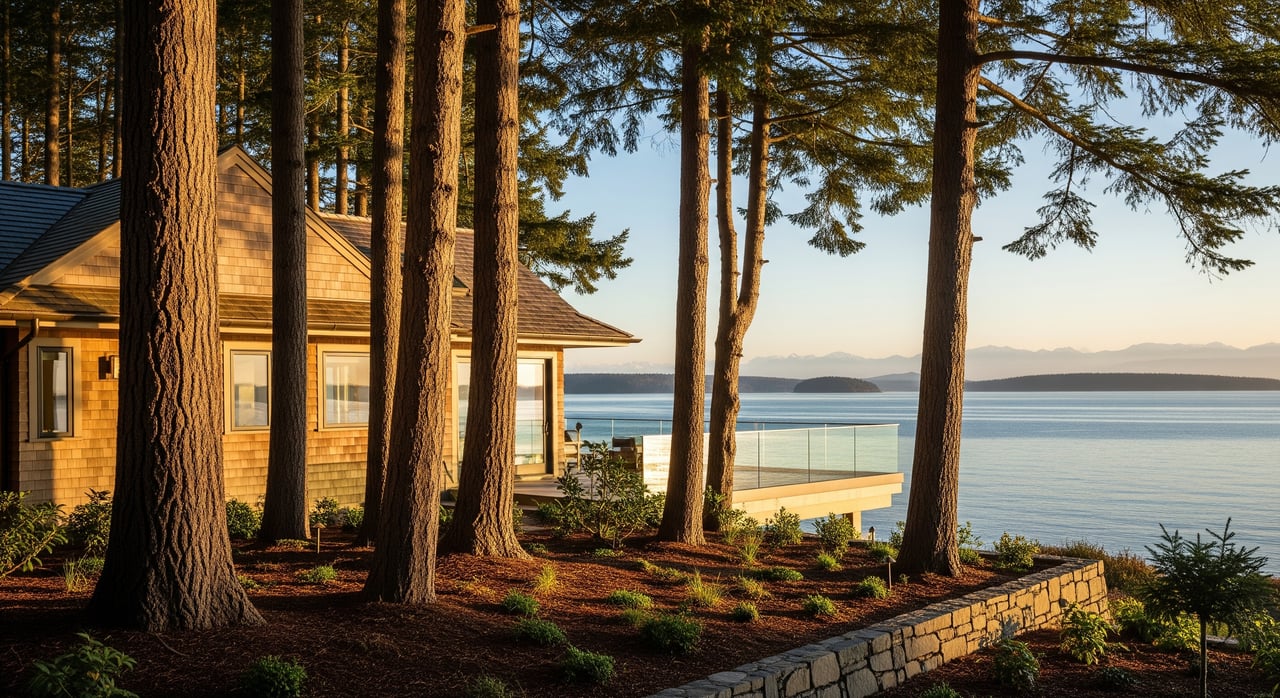
Do you love the sweeping Puget Sound views in Innis Arden but feel unsure about what you can do with the trees on your lot? You are not alone. In this neighborhood, view and tree covenants shape what you build, plant, trim, or remove. In this guide, you will learn how these rules work, how they overlap with city regulations, and the steps to take before you plan any tree or view work. Let’s dive in.
Why covenants matter in Innis Arden
Innis Arden combines prized water views with mature trees on many properties. That mix makes private covenants a central part of everyday home ownership. These recorded rules were created to preserve neighborhood character, protect view corridors, and manage landscaping and building heights. They bind current and future owners, so they affect both your day-to-day plans and your resale value.
You may see different players involved. A homeowners association or community club can review and enforce covenants. The City of Shoreline and King County can require permits for tree work or development, especially in critical areas. Knowing who oversees what will help you plan efficiently and avoid missteps.
What view covenants cover
View covenants exist to preserve sightlines to the water and other scenic resources. They often limit structure height and location and may set rules for vegetation within view corridors.
View rules in plain language
- You may need approval before planting, trimming, or building in a way that could affect a neighbor’s view.
- Some lots have recorded view easements. These are specific, enforceable corridors that carry strong rights.
- Remedies can include required trimming or removal, mediation or arbitration, and in some cases court action if informal fixes fail.
What tree covenants cover
Tree covenants protect aesthetics, slope stability, and neighborhood character. They manage removal, pruning, and replacement.
Tree rules in plain language
- Significant tree removal usually requires written approval from the association or an architectural review committee.
- Many covenants require replacement trees with approved species and sizes if removal is allowed.
- Hazard exceptions exist. You often need an arborist report to document disease or risk before removal is approved.
Private covenants vs public rules
Private covenants sit alongside city and county regulations. You often need to satisfy both.
How they interact in Shoreline
- Private approval does not replace municipal permits. You may still need a city permit for removal, trimming, or work near slopes or shoreline bluffs.
- Public rules can prevent removal even if your covenants allow it. Critical-area protections and shoreline rules may control what is possible.
- If there is a conflict, expect to meet the stricter standard and secure both approvals before you act.
Find your governing documents
Start with the exact recorded language that applies to your parcel.
What to request and review
- Recorded CC&Rs, any view easements, plats, and restrictions. Your title company or the King County Recorder’s Office can provide these.
- HOA or community club documents. Ask for Bylaws, rules or ARC standards, and any view or tree policies.
- Recent HOA records. Request meeting minutes, violation history, and any pending enforcement actions for the property.
- Permit history from the city and any prior approvals or arborist reports the seller holds.
Plan tree work or view restoration
Before you touch a limb or stake a new structure, follow a simple path.
Three-step pathway before work
- Check documents and rules. Read your CC&Rs, view easements, and HOA standards. Confirm city and county permit needs.
- Get an arborist assessment. Use an ISA-certified arborist to document species, size, condition, hazards, and view impact.
- Secure written approvals. Apply to the HOA or ARC and the City of Shoreline as required. Keep copies of all approvals and reports.
Hazard trees and emergencies
If a tree is dangerous, safety comes first. Many covenants allow emergency removal for hazardous or diseased trees. You should still document the condition with photos and an arborist report, and notify the HOA and city as soon as practical. Be prepared for required replacement or mitigation.
Handle neighbor tree conflicts
View and tree issues are often neighbor-to-neighbor. A clear process helps you reach a fair result and preserve goodwill.
Practical steps to resolve
- Document respectfully. Take dated photos of the view impact and any safety concerns.
- Talk first. A calm conversation often leads to trimming instead of full removal.
- Offer compromise. Propose crown thinning, windowing, or replanting with lower species.
- Follow the rules. If you cannot agree, use the HOA process or any required mediation.
Enforcement and remedies
Associations have tools to address unauthorized work and resolve disputes.
What associations can do
- Levy fines and special assessments under the governing documents.
- Require restoration or replanting. If an owner does not comply, the association may perform the work and bill the cost.
- Seek an injunction in court to stop or reverse unapproved changes.
Evidence that matters
- The exact recorded covenant or easement language.
- Written HOA or ARC approvals or denials and meeting minutes.
- Arborist reports, municipal permits, and dated photographs.
- Any correspondence that shows notice, requests, and decisions.
Buyer checklist for Innis Arden
- Get and read all recorded CC&Rs, view easements, and ARC standards that apply to your parcel.
- Ask for HOA records. Request meeting minutes, violation history, and pending enforcement.
- Review the title report for easements, liens, and restrictions.
- Confirm municipal requirements for tree work, slope areas, and shoreline proximity.
- Hire an ISA-certified arborist to assess health, hazard, and view impacts of key trees.
- Ask the seller for copies of prior approvals, permits, and arborist reports.
- Consider a contingency tied to approvals for planned view or landscape work.
Seller checklist for Innis Arden
- Gather CC&Rs, Bylaws, ARC standards, and any prior approvals or permits for tree or view work.
- If you plan pre-listing trimming or removal, secure HOA and city approvals in writing first.
- Disclose any pending violations, fines, or special assessments.
- If buyers are likely to request trimming for view restoration, consider starting the process early to reduce delays.
Red flags and pitfalls to avoid
- Relying on verbal assurances. Most approvals must be in writing to be valid.
- Assuming city permits are not needed because the HOA said yes. You typically need both.
- Skipping documentation on emergency removals. Keep photos and an arborist report to prevent disputes.
- Overlooking old easements or plat notes. Older recorded restrictions still carry weight.
- Closing without asking for violation history. Surprise fines and required work can follow you after purchase.
The bottom line
Innis Arden’s value is tied to both its views and its trees. When you know how private covenants and public rules work together, you can plan smarter projects, avoid fines, and protect your property’s resale value. Start with the recorded documents for your parcel, consult qualified professionals, and secure written approvals before you do any work.
If you want local guidance on due diligence, approvals, and how view and tree covenants can affect your sale or purchase, reach out to Adam Cobb. Our team can help you navigate the details and move forward with confidence.
FAQs
What are view covenants in Innis Arden?
- Private rules recorded on title that limit structures or vegetation to preserve view corridors, often requiring written approval before changes that could impact a neighbor’s view.
How do tree covenants affect removal or pruning?
- They usually require HOA or ARC approval for significant pruning or removal, may mandate replacement planting, and often contain exceptions for documented hazardous or diseased trees.
Do I still need a city permit if the HOA approves?
- Yes, you may. Private approval does not replace municipal permitting, especially near slopes, shoreline bluffs, or other critical areas.
How can I check if my lot has a view easement?
- Review your preliminary title report and obtain recorded documents from the King County Recorder’s Office, then confirm with your HOA or ARC standards.
What should I do if a neighbor’s tree blocks my view?
- Start with a respectful conversation and propose trimming. If that fails, follow the HOA process, which may include mediation or formal enforcement depending on your covenants.
What evidence helps with approvals or disputes?
- Recorded covenant language, written HOA decisions, arborist reports, municipal permits, and dated photos that show view impact, health, or hazard conditions.
Can an HOA require me to replant after removal?
- Many covenants allow an association to require replacement trees or mitigation, and to levy fines if removal occurred without approval.